

I’ve been bearish on AAVE since their DAO drama started which highlighted serious internal risks. These have now materialized with huge impact on its users.
Since the rsETH exploit, AAVE incurred over $200 million in bad debt and lost more than $10 billion in TVL as everyone rushed for the exits.
AAVE’s reputation and trust are compromised to the level that it is now fighting for its very survival. At the time of writing this, there is no solution to its bad debt problem and billions in assets are still stuck on their platform with users unable to withdraw.
This is what we call a black swan event in crypto. As a central nexus in DeFi, AAVE impacted everyone. Where next from here? I got a few suggestions below.
Hundreds of Patrons made YCC their home, your gateway to our exclusive alpha!
Premium access & opportunities + Lifetime Patron role on Discord

How AAVE became compromised?
If you missed the events around AAVE and the rsETH exploit, I encourage you to read this long tweet I made that went viral. It gives a good overview. TLDR below.
TLDR: AAVE is facing a bank run, became illiquid, and users are stuck and unable to withdraw their assets. This is because AAVE listed rsETH as a collateral. Turns out rsETH was not a safe asset and was exploited by hackers that borrowed against fake rsETH tokens over $200 million in ETH (i.e. users money deposited on AAVE).
This incurred bad debt on AAVE which led to contagion across most of DeFi. Everyone rushed for the exits, leaving laggers stuck and trapped. Since the exploit, AAVE barely communicated with their community, threw their users under the bus, and took no accountability for listing a risky asset, one of their core responsibilities.
Since this started, more than three days ago, AAVE lost over $10 billion in TVL across its core Ethereum markets, which were the most affected by the exploit. For example, their USDT market went from $4.5 billion to $2 billion as of today.
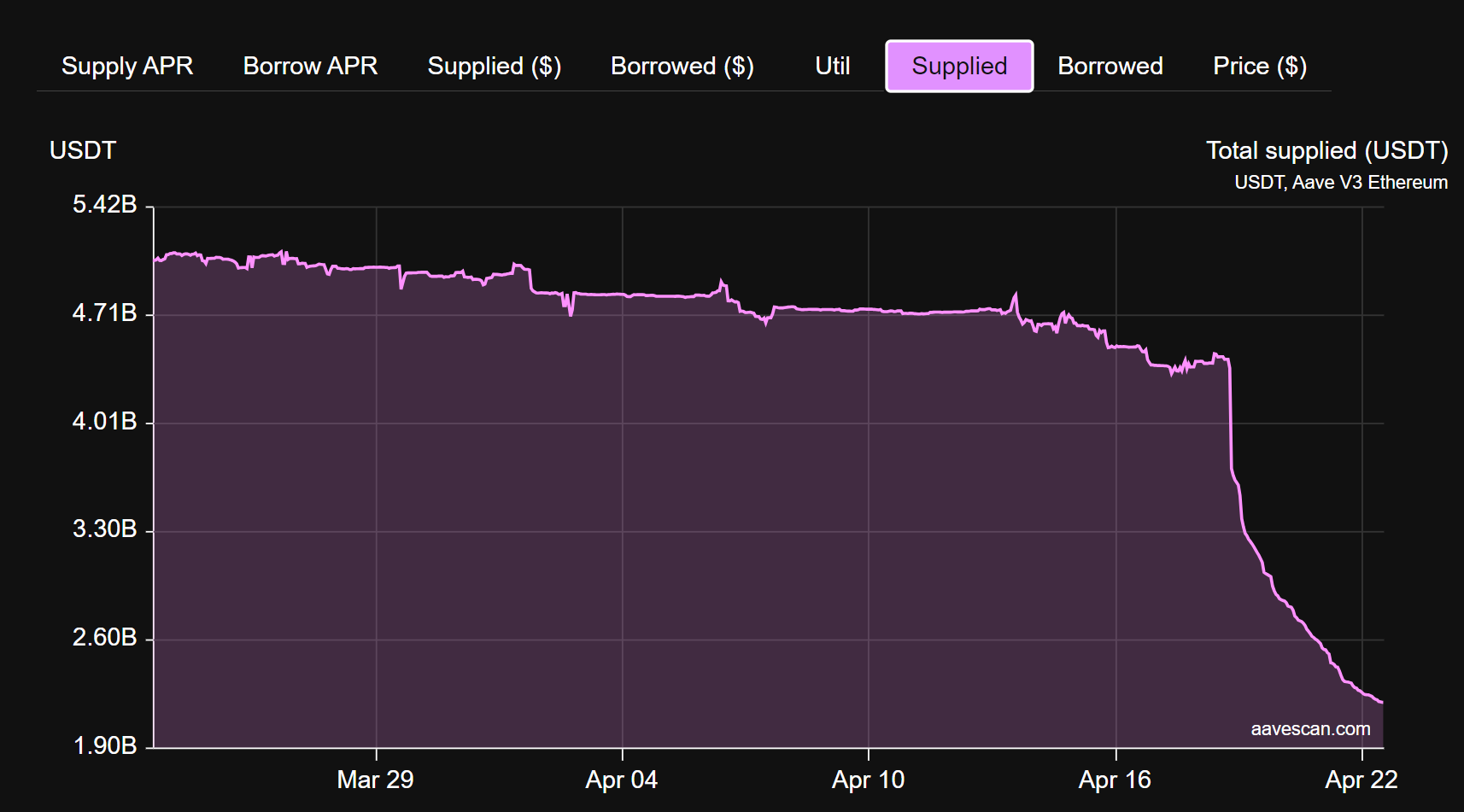
With AAVE on silent mode, it’s unlikely things will change any times soon as more and more liquidity leaves their platform. This impacted most of their markets as people look for alternatives. More on that soon.
The irony here is that AAVE became the biggest loser, even if the exploit itself had nothing to do with them directly. Their exposure to rsETH became critical because they allowed a risky asset to be collateral. Some say it was listed by AAVE due to a conflict of interest.
Worse, they allowed hundreds of millions to be borrowed against such an asset. Therefore, the hacker was quick to take advantage of this. Since all markets were impacted, AAVE users that never heard or touched rsETH were also affected.
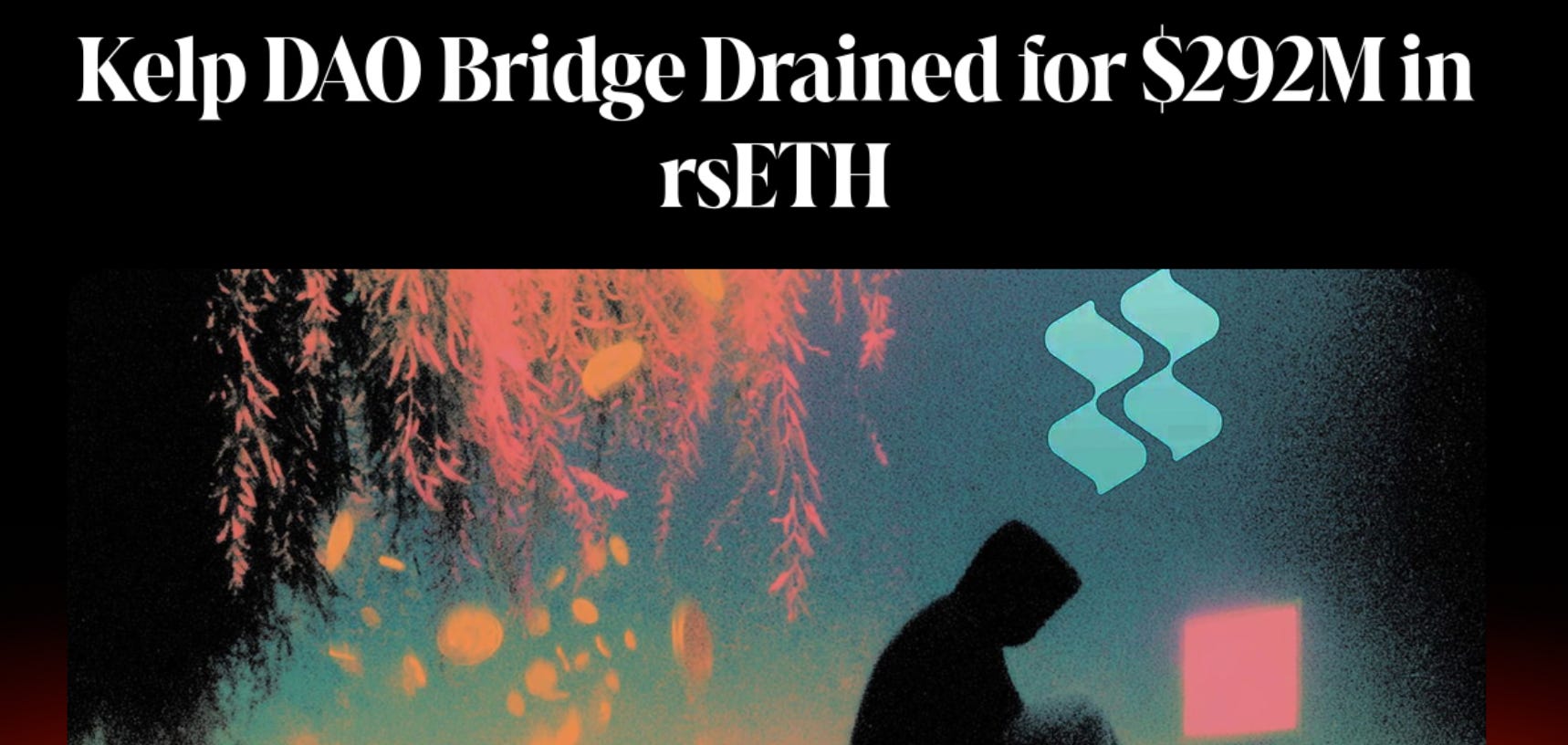
How this will end, nobody knows. There are too many affected stakeholders involved and they appear to be lawyering up instead of cooperating to find a settlement that can benefit users.
Even AAVE put this loss on their users instead of coming up with a clear plan on how to mitigate this huge oversight in their governance and risk management. If you’re still using AAVE, I recommend to reconsider, and look at the below alternatives.
They innovated while others stalled.
Fluid is a relatively new entrant into the lending markets at just under $1 billion in TVL. Their advantage is in their agility and eagerness to innovate in the lending space while others lag behind.
For example, soon after the AAVE crisis started, Fluid created an AAVE collateral swap that allowed trapped users on AAVE to sell their ETH positions and exit impacted markets at negligible cost.
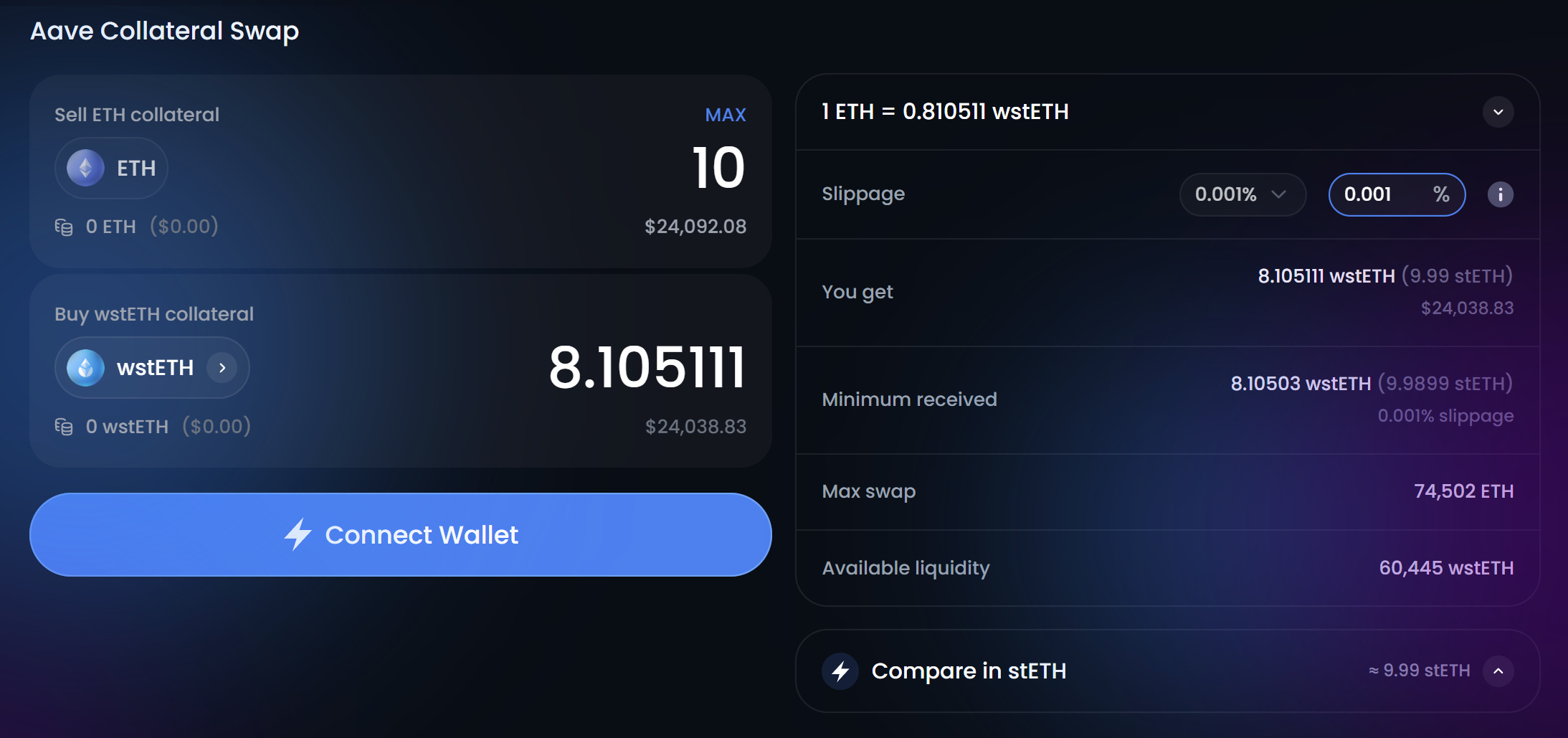
This is because Fluid has ETH loops on AAVE and this swap allowed them to unwind their positions, reduce their exposure, and give users a way out. A win-win.
Another advantage of Fluid is their more efficient markets in terms of lending rates and yields. Since you can borrow against your liquidity pool tokens that earn yield, you pay less in borrowing costs.
We also used Fluid to farm the $CHIP airdrop by USDai which turned out a massive win at 4x the ICO price! Use my team invite to join Season 2 farming!
Fluid also provides an easy way to earn yield via their Lite feature that automates yield generation. However, be careful of the underlying exposure. In this case, Fluid acts like a Morpho curator/vault and you take additional risks if they move your money into risky assets to chase higher yields. More on that next.
A direct competitor to AAVE.
The problem with AAVE, which Morpho has fixed some time ago, is that all deposits in v3 enter one big pot. When the hacker came and borrowed assets from that pot (by posting fake collateral), every AAVE depositor was affected in some way.
On Morpho, you can use discrete markets that allow just one type of collateral and one type of borrowing asset. This segregates risks and contains them to that market. Had AAVE used such a mechanic for rsETH, which v4 would have allowed for, the contagion would not have been this dramatic.
An example of such a market is presented below which uses only WBTC and USDC. You post BTC and borrow USDC, that’s it. AAVE simply allowed too many collateral assets (hence more risks) on their v3 platform which eventually lead to the current disaster.
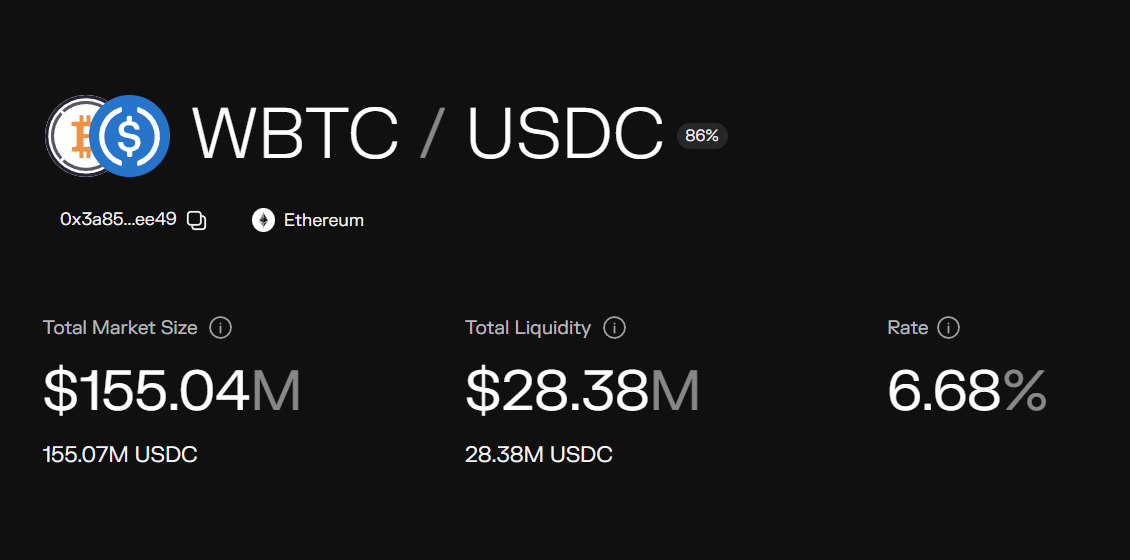
The problem with Morpho is not these markets, but rather the vaults provided by their curators. Sometimes, in the rush to chase higher yields and profits, Morpho curators expose users to exotic assets that lead to losses (like the Resolv USR hack).
I don’t recommend using Morphos vaults, they are too dangerous since curators have little incentives to protect users that deposit there. Curators take a cut on any profits, so they always aim to maximize that even if risks are high for depositors.
Overall, Morpho is a solid choice at over $6 billion in TVL if you know and understand the markets you play in.
Spark Protocol (former MakerDAO)
One of the oldest lending markets in crypto.
The creator of the DAI stablecoin, MakerDAO, is one of the oldest lending protocol in crypto. They have since rebranded to Spark / Sky and launched a new stablecoin called USDS to replace DAI.
They faced their ups and downs over the years, but during this AAVE crisis, over a billion in liquidity that left AAVE went to them, making Spark the key beneficiary of this crisis.
This is for a very good reason.
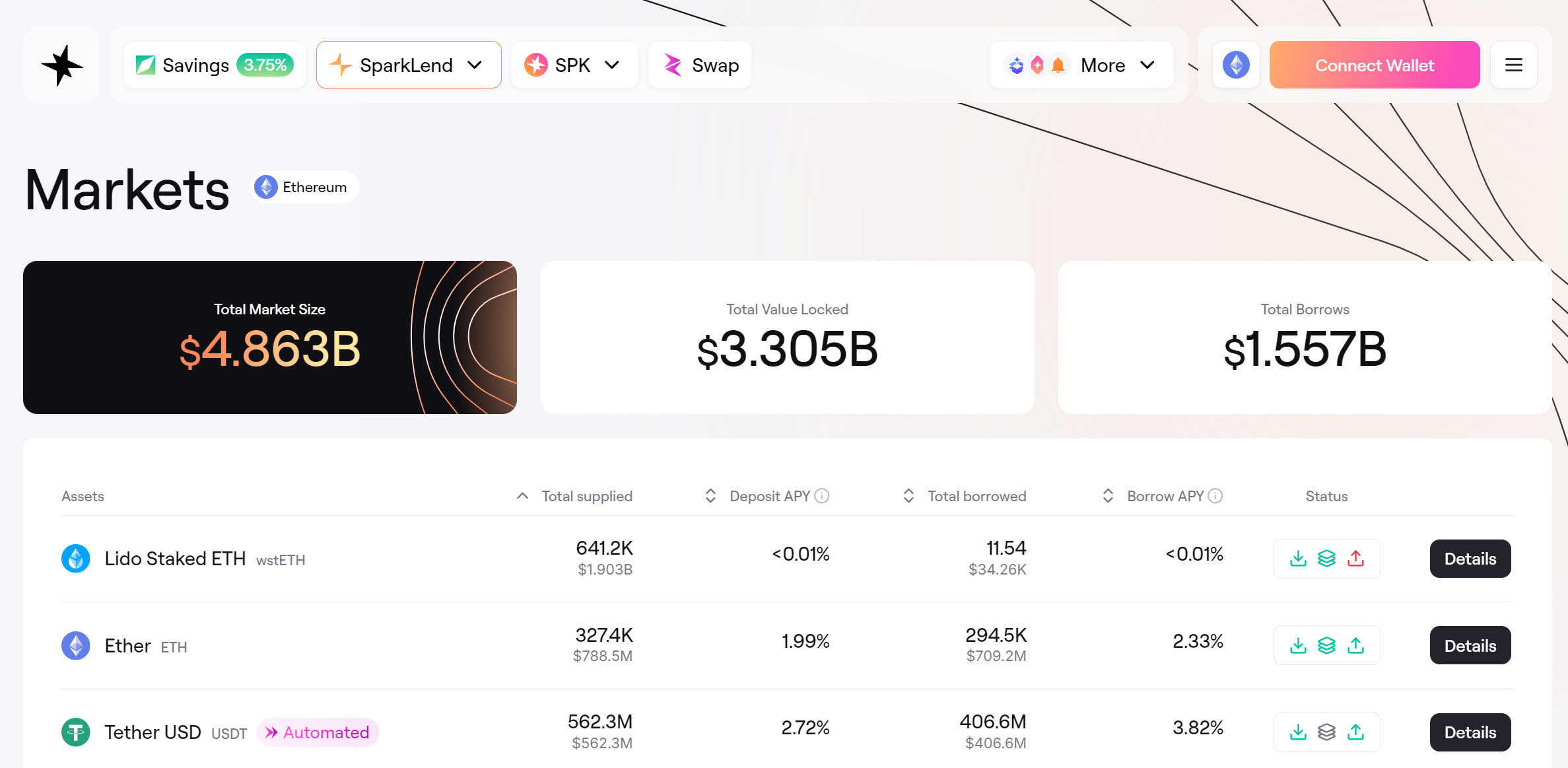
Spark also had rsETH on their platform as a collateral, but was removed. They applied a much tighter risk mitigation policy which has now paid handsomely. When you deal with billions, you need to put user protection and risk mitigation as a top priority. This means being very picky on your collateral assets.
Spark delivered where AAVE failed.
This makes them a favorite among whales and is one of the most robust protocols out there. Together, Spark and Sky hold over $10 billion in TVL and may rival AAVE for the top spot in lending if AAVE continues to bleed liquidity.
Honorable Mentions
Hyperliquid emerging ecosystem of lending markets and related DeFi
Jupiter lend and similar protocols on Solana
Uniswap if all you want to do is earn yield on your liquidity
Curve finance has a growing lending market with crvUSD
Pendle yields are always attractive
Whatever you choose, pick security first. Avoid exotic assets (like Ethena’s USDe) and if you spot teams getting greedy (like AAVE Labs), get out. Greed in crypto is the first sign things will go wrong.
For example, the AAVE Labs founder (Stani) bought a mansion in central London worth $30 million, then proceeded to do a hostile takeover over the AAVE DAO, removed other service providers that were uncomfortable, and paid himself $50 million in DAO funds to develop AAVE v4.

Weeks later, the AAVE crisis started. Coincidence?
I think the AAVE DAO was so focused on fighting themselves, they forgot their protocol was securing over $26 billion in assets (now under $16 billion). Expensive mistake that costed them billions in TVL. They got complacent and greedy.
But the biggest loss is the trust of their users.
I also had assets in AAVE, but luckily I removed them in time. I will never use AAVE again, especially while it is under the current leadership which also failed to manage this crisis from the start.
Let me know if I missed any good DeFi protocols that are worth attention and drop them in the comments. Like and share this post to spread awareness!
P.S. If you’re looking to farm the next big DEX airdrop, use my Nado private invite. Limited invites available - good luck!
This newsletter is made possible with the generous support of our Patrons and partners. Upgrade your experience by becoming a Patron for lifetime access to our exclusive private alpha! Details are available on our Patrons page. All info is provided for educational purposes only and is not financial advice.